


Welcome to PINGG, a podcast
by the SINCRONY Project.
Where we have a look into
Powerful and Inclusive Narratives Generated for Good
About the
Podcast
This podcast is part of the SINCRONY project, an Horizon Europe initiative that explores how young people experience participation, belonging, and voice in contemporary democratic processes.
Through conversations with project members and young people, the podcast creates a space to reflect on what meaningful participation really looks like when intersectional realities -such as gender, class, and migration- shape how young people engage with society, institutions, politics, and community life.
Across six episodes, the series addresses key project themes including intersectionality, political participation, inclusion and exclusion, power and privilege and also tools developed by SINCRONY to the conditions that enable young people to feel heard, valued, and able to act. Rather than offering concrete answers, the podcast invites listening, reflection, and dialogue across different experiences and perspectives.
Episode 3
Participation

A very important important decision about your life is being made right now…. Participation can take many forms, from choosing the snacks in the school vending machine to deciding who gets to run your country.
Read more
PARTICIPATION asks why young people are often described as “the future”, while being excluded from many of the decisions that affect them in the present. We dive into concepts like voice, agency, representation and tokenism through the voices of Isabel Menezes and Meque Samboco (University of Porto) Maria Bruselius-Jensen (Aalborg University) Valentina Holecz (University of Geneva), Jeanne Perreul (Missions Publiques) and Camilla Vedovato (ALDA | European Association for Local Democracy).
We also travel to the city of Porto, where the portuguese team is testing the I-PARD approach (Intersectional Participatory Action Research-and-Deliberation) through one of its school pilots at the Escola Secundária Dr. Joaquim Gomes Ferreira Alves in Vilanova de Gaia. It also features another EU funded initiative ‘YouthDecide 2040: Visions of Democracy with and for Future Generations’, a project that invites young people to imagine the future of democracy and develop future democratic scenarios.
The episode draws on key insights from SINCRONY’s Deliverable D3.3 – Integration of Critical Assessment of Practices and Deliverable D4.1 – Policy Analysis Report, highlighting the importance of meaningful youth participation, recognition and representation when creating inclusive democratic spaces.
Also on
Spotify

Transcript
OJorge Gutiérrez:
Please, don’t panic, but a very important decision about your life is being made right now. And probably not just one. Important decisions are being made all the time. About your school, your neighbourhood, your city, your rights, your health, and even your future. Some decisions may change the spaces you move through every day, the rules you are expected to follow, or even the kind of life you are told to imagine. From choosing the snacks in your school vending machine to deciding who gets to run your country. I know, there is a big gap there, but both are important! And here’s the question: who gets to make those decisions? And maybe an even more important one: why isn’t young people there? For a long time, we’ve been told that we are the future and that one day, when we are adults, we will have our chance to shape society. But, what if that day is already here? What if we, as young people, are not just future citizens but real members of our communities right now? What if our ideas, experiences, and creativity can help improve our society and democracy itself? What if participation isn’t something reserved only for politicians, activists, or adults?
Jorge Gutiérrez:
Welcome to PING! A podcast by The SINCRONY Project, where we will have a look into powerful and inclusive narratives generated Fuck good. Dear listener, can I tell you a little secret? When I was younger— well, I am still young though— if someone had asked me whether I was a participative person, I would probably have said no. I thought participation was something adults did, something that happened in parliaments, political parties, elections, or meetings. I never imagined there could be a place for someone like me, and it took me years to realise that I was looking at this concept through a very small window. And here’s something I’ve learned along the way: if we don’t get involved in the decisions that shape our lives, someone else will make them for us. Have you ever heard someone say, “Young people don’t participate anymore” ? Maybe you even thought that yourself. But no worries, The SINCRONY Project is is here to help. Throughout this episode, we’ll meet researchers, educators, and most importantly, young people who are already shaping their communities. So let’s begin our journey with someone who has dedicated much of her work to understand how young people engage with democracy and civic life. Hello, Professor Isabel Menezes.
Isabel Menezes:
So I’m Isabel Menezes, and I’m a professor at the University of Porto in the Department of Education Sciences the Faculty of Psychology and Education. My initial training is in psychology. I also have a training in theatre, by the way, but it’s something that I don’t do for many years. And that’s it.
Jorge Gutiérrez:
Welcome, Professor. Let’s get into today’s topic: participation. Could you explain it to us in a nutshell? What does participation really mean?
Isabel Menezes:
Participation can be done in very different ways. This is an important thing to say. Because sometimes when people think about participation, either civic participation or political participation, they think about very traditional things such as voting or such as going to a demonstration. But participation can be simple things. Simple things like you decide not to eat meat or to eat less meat. That is also a political decision. You decide to link a video or make a post about a social or political issue. That is also civic and political participation. So the idea is that participation in this civic and political way are simple things that you can do in your life where you try to express your political, your social concerns. In a way that tries to influence other people. So the idea of SINCRONY is also an idea that is very inclusive. You have to have different voices. So it’s not about getting a consensus or everybody thinking the same way. The nice thing about participation is that it allows people with different ideas to come together and surely disagree. But that is not bad, that is good. The possibility that you have to disagree with other people, to think differently, and then maybe you can meet in the middle, or at some point you can just agree that you disagree, and that’s it. But the idea of SINCRONY is also that this process of deliberation, where different people come together and express different ideas, is important for change to occur in school. Schools, communities, organisations. So I think that if I would go for a basic of participation, that would be it.
Jorge Gutiérrez:
So, Professor, if we could travel back in time and meet young Isabel in Portugal, what would we see? Was politics already part of your everyday life?
Isabel Menezes:
When I was 9, we had a revolution in Portugal. So this is something that is also important because what happens around you when you are growing up is very important. So suddenly for me, politics was everywhere because you were in the middle of a revolution. People were talking about politics every time. Until 1974, Portugal, as in Spain, as in Greece, these three countries in the south of Europe all had dictatorships. You turned the television, politics was there, you went to school, politics was there. So for me in my early years politics was very present. So we had elections and we had new words, you know, I learned a lot of new words because it was— some people were communists, other were socialists, other were fascists, other were anti-fascists. So it was really a very interesting time. And because of that, I think I learned to speak out. So I was not probably very involved in the sense that I didn’t become a member of a political youth or a political youth branch of a party or etc. But I learned one important thing, is that you can speak out and you can say what you think independently of the person that is on the other side. This is something I think comes from this background of politics being everywhere and people discussing and debating all the time, which when I was very young I found very interesting, honestly.
Jorge Gutiérrez:
Thank you, Isabel. If participation starts with having a voice, the next question should be: who usually gets to express their voice? Are young people speaking for themselves or for adults? Are they speaking on their behalf? This is exactly what we asked to two of our SINCRONY partners who have a lot of experience in Democracy, Political Science, and Social Change Processes. So, Maria?
Maria Bruselius-Jensen
Hello, my name is Maria Bruselius-Jensen, and I’m an Associate Professor at Aalborg University, which is actually situated in Copenhagen, Denmark. Well, that’s a tricky question because it’s actually usually not young people. So the people who represent youth is grown-ups. It’s adults, it’s people in power who, some of them, try to represent young people as they think they want to be represented. But it’s still not directly young people having a voice. It’s someone else who represents young people. Some representatives, some grown-ups are really good at that and they actually really engage with young people and try to understand them and put their perspectives forward, but others might interfere their own opinions a little bit into the way they represent young people and what they might think is important to young people, or what they think youth is about and what a good youth life is. And that sort of mixes up a little bit the way they represent young people.
Camilla Vedovato
Hello everyone, I’m Camilla Vedovato and I represent ALDA, the European Local Democracy Association. I am engaged in the SINCRONY project as I am also coordinating the Gender Inclusion and Human Rights Hub in ALDA. Speaking about or for youth without them reproduces paternalism pattern, and inclusion means ensuring young people are agents of their own narratives. I think it erases your lived experience and also reinforces unequal power relations.
Jorge Gutiérrez:
What María and Camila are describing has a name. It’s called tokenism. It is when people are included but in a symbolic way. Yes, they are invited to speak, they are mentioned in the newspaper or even shown at a picture, but without real power to change anything. To make this easier, let’s use a metaphor. Valentina, could you help us with that?
Valentina Holecz
Hello, I’m Valentina Holecz and I work with the SINCRONY project and I’m from the University of Geneva. My expertise areas are young people and political participation and social movements. Avoiding tokenism is It could be also seen as like hosting a dinner. It’s not enough to invite someone and give them a chair to be at the table. They need to feel welcome to join the conversation. So when we include young people, we have to go beyond a simple invitation. They need to feel comfortable, respected, and generally able to speak up. And that means noticing who talks, who stays quiet, and whether their ideas yes or taken seriously or not. Otherwise, it’s just like sitting at the table, maybe even eating, but never being asked if you’re okay and what are your thoughts about it.
Maria Bruselius-Jensen
When you are in like formal discussions or decision-making, you have to think about what the people around you would think is important, and you have to represent them, not just yourself. Your own interests. So it’s also about engaging with the people you represent in everyday life so that when you need to represent them, you know what is important to them as well. And who gets to represent young people also has to do with the level of power. So the more powerful the position that this person is in, then it’s less frequent that it’s actually young people.
Camilla Vedovato
Being present for me means you’re in the room, while being represented means your views and your concerns and realities are actually integrated into the decision. So inclusion is about moving from symbolic presence to real influence. So you’re not just in the room, but your views are also in the room and they’re taken into consideration.
Jorge Gutiérrez:
So, how do we move from talking about youth participation to actually seeing young people lead? One of the ways SINCRONY explores this is by developing and testing participatory methods in real context: in schools, municipalities, and community spaces. These are the SINCRONY pilots. Places where the project does not just talk about participation, but instead puts it into practice. One of the approaches developed for this is called I-PARD, which stands for Intersectional Participatory Action Research and Deliberation. Okay, I’ll explain myself. It is a participatory approach that helps young people identify what matters to them, plan what they want to change, take action, reflect on what’s happened, and demonstrate what they have learned. So, to understand how I-PARD works in real life, let’s think of this as a mission. And the mission is this: investigate, plan, act, reflect, and demonstrate. But every mission needs a team, right? First, we need the main characters, the stars of the show.
Dinis Ribeiro:
My name is Dinis Ribeiro.
Rita Nogueira:
Hi, I’m Rita Nogueira.
Guilherme Lopes:
I’m Guilherme Lopes.
Rita Gonçalves:
I’m Rita Gonçalves.
Jorge Gutiérrez:
And of course, we need an ally.
Anabela Amaral:
I am Anabela. I’m a Portuguese and French teacher.
Jorge Gutiérrez:
Then, we need someone from the SINCRONY project to guide the process, I guess.
Meque Samboco:
Hello, my name is Meque Samboco.
Jorge Gutiérrez:
And finally, every story needs a setting.
Anabela Amaral:
In this case, our setting is a high school, Escola Secundária Ferreira Alves, in Vila Nova de Gaia, very close to Porto.
Meque Samboco:
Hello, my name is Meque Samboco. I’m a researcher at the University of Porto. I’m also a PhD student in Educational Science at the Faculty of Psychology and Educational Science. Well, the process of involving young people in investigating about their realities, the students begin to take on the active role of investigation.
Rita Nogueira:
We are in a class, so everyone from our class is part of this project, and we are organised in 4 groups. Every group is dealing with a topic that they chose. We have a group that is only focused on well-being, and the other 2 groups are focused on participation.
Dinis Ribeiro:
It’s very interesting seeing what objectives we need to cheque off and how we can gather as much data as possible with as little questions as possible.
Guilherme Lopes:
We are organised in order to do questionnaires and interviews. So we have one questionnaire on bullying, one questionnaire on participation, another questionnaire on the bullying, on the psychologist part, and we are also interviewing main leaders in our community and in our area.
Rita Gonçalves:
In general, we are working as a democracy and everyone together. In our questionnaire, we want to describe the bully in terms of psychological facts, like if it’s an angry person, insecure. We want to know if it’s more men who do it, or women, and especially to know if the person has had contact with bullying.
Dinis Ribeiro:
Giving us this freedom, this ability early, will incentivize us to question why systems work as they work and to always see a reason for why everything in the society works the way it does.
Rita Nogueira:
We’ve already talked about these problems in groups, like with friends or in class, that we wanted to have more voice, but we never really made something to go to the administration of the school. So this project is really amazing because we can expand our knowledge and expand our communication and what we really think and change something in our society.
Dinis Ribeiro:
I think the tools that this project also teaches us can be and probably will be very useful in our personal careers in the future, because things such as gathering data and processing data are useful in all kinds of fields.
Guilherme Lopes:
We are learning a lot, we are working a lot, and we are getting to know a lot of people, a lot of methods, and we are getting a lot of opportunities to do different things and things that will be important for us in our future lives.
Rita Nogueira:
We learn how to do statistics and how to understand how the people behind the studies we have, we are presented to us, how they work and how we can make the society better.
Meque Samboco:
Looking back at the pilot project, I could see that it was a collaborative, active, and participatory process. The participants quickly realised that our role was to facilitate the process and provide all of support while they had a more active part during the process and can be critical and creative. I was surprised by the ability and autonomy showed by the young people when designing tools for data collection in relation to the identified problems from their school. It was incredible to see students working together.
Anabela Amaral:
They are very active and they are very demanding, even with the researchers. They want to do, to know the right way to do the things, to do the research, and they want to show outside school to the community, to the society, what they are doing.
Meque Samboco:
During the consortium meeting in Porto, some students were given a few minutes to talk about their project in your school. The student gave an excellent presentation using a fictional person called ‘Faustino‘ to illustrate their work. The presentation for me was so incredible, powerful, was very nice, was emotional, and for me this was a good moment of my professional life. I think that the important recommendation for replication of this kind of participatory process and to be successful too in school or in other context, it may be necessary to take advantage of the talent of students in each area for the project. The young people have many talents. They can image, they can create, they can think, and they can do a lot of things to change your community, your school, and other, other sites. And it’s necessary to use more technology to search information, to search document, to search a lot of things that the student need to make your research, and to use the social network to disseminate your research, your activities, and other things which the students are doing. This can motivate other young people and can make your community a different place.
Anabela Amaral:
Great advice I would give to all my colleagues is to invest in different projects. Of course, we know we have the regular work, we have the exams. Of course, that’s important, but a side work, it’s very important, and we should get from this projects, important tools that we can use and we can face adversities, new questions the students have, new challenges, everything. So the tools that we can— some of them are very practical, others are more theoretical, but you can mix all of them and we can get a good result. I believe it.
Jorge Gutiérrez:
Honestly, after listening to the students, I think it’s hard not to feel a bit hopeful. And yes, I have to say it, I wish more schools had spaces like this. So well done to everyone involved in the Porto pilot. Hopefully this kind of work can keep growing and be adapted in more schools, communities, and places where young people Young people have something to say, which is basically everywhere. But SINCRONY is not the only place where this is happening. Across Europe and mostly worldwide, there are many initiatives where young people can take part. One of them is YouthDecide 2040, a Horizon Europe project that invites young people to imagine the future of democracy. Because let’s be honest, if we want to change democracy, first we need to imagine what it will become. But enough of me, there is someone who is very committed to empower communities and knows much more about this than I do. So let me introduce you to my dear colleague, Jeanne Perreul.
Jeanne Perreul:
My name is Jeanne Perreul. I am a Participatory Project Officer at Missions Publiques, which is an organisation dedicated to designing and implementing deliberative processes, including citizens or stakeholders. And we’ve been doing this for the past 25 years across Europe. And I’ve joined Missions Publiques 3 years ago now, and I’m particularly focused on the theme of youth participation. And this is why I am in charge of the YouthDecide 2040 project. So for a bit of context, YouthDecide 2040 aims at gathering 600 young people from 18 to 35 across Europe to imagine the future of democracy using a 1-day workshop with foresight practices. So for this, we worked really hard with all the partners from this consortium to recruit 600 young people across the 19. I think we all need to realise that young people don’t form a homogeneous group. We hold wide ranges of views and relationship or attitudes to democracy, just like any other group. But structurally, our voices are underrepresented. With european demographics ageing, we are simply heard less in institutions. And I think this is the fundamental reasons why these spaces matter, why having young people in those kind of processes matter.
Jorge Gutiérrez:
That makes sense, Jeanne. I guess that if young people are constantly underrepresented, it can easily lead to disengagement, right?
Jeanne Perreul:
It’s something actually that our work package on research found out. They said that between 18 and 24 you have this kind of window before disillusionment sets in, basically. So young people tend to not have drifted into the passive withdrawal that we can see in older generations. We can see that youth tend to want to act more and go beyond deliberation So this is something that is really beneficial, I think, when you are facilitating, because it means that you have a kind of energy in the room that is useful to move forward. But this is precisely the same energy that is the core challenge, because if participants leave a workshop fired up with nowhere to channel it, you haven’t empowered them. You’ve kind of frustrated them. And research on participatory processes warns that poor framing of impact and follow-through is actually worse than not engaging at all because it can deepen cynicism. So when you are designing a process, you have to think about building concrete pathways for actions directly into the process and not just promising them later on. And on a more personal level, It always brings me so much hope, joy, seeing people leaving a workshop with a new tool, a new network, maybe a clearer voice. I feel like it’s what makes it worth it.
Jorge Gutiérrez:
After all this journey, we’ve seen different ways of understanding participation. Of course, not everyone has access to these spaces. Not everyone can join a workshop, feel safe enough to speak in a school project, lead a youth organisation, or even be lucky enough to have a welcoming family, or even living in a democratic country. So, to close this episode, I wanted to ask our guests one final question: Where can participation begin when speaking out does not feel easy or even possible?
Jeanne Perreul:
Maybe one thing that I have experienced on a small scale, with a close circle is how much a conversation with someone you trust can change things. And by conversation, I mean a conversation where you do not have only someone who agrees with you, but actually challenge you, but in a trusted way and a conversation where you feel heard and that you also have to listen back.
Valentina Holecz:
Maybe it depends on the situation or the person. Like, I wouldn’t tell that to her, but if my mom speak on my behalf, I might feel annoyed. But I also have to admit here that most of the time she’s right. But this is like a relationship that has been trust and built through time. And that doesn’t mean that I don’t want my voice to be heard, or that my ideas or my dialogue are not worth sharing. So of course, my opinion will always be perfect or right, and that’s— it’s not really just the point, but it’s also a matter of plurality of voices. It’s the chance to put your perspective out there and to be listened to and to learn from this exchange.
Maria Bruselius-Jensen:
If you look across a group of young people, then some young people young people are born within structures that support them. They believe that they can have influence. They, they’re educated to know how to speak in public spaces. They might even have parents that have powerful positions in their work life. And for those young people, it’s more natural to claim a space and to have a voice. And for young people who grow up in different circumstances, who might not have like daily discussions during meals, who feel like they don’t know how to formulate what they wish and how their political perspectives are. I mean, it’s much more difficult because they both have to gain the confidence, the language.
Isabel Menezes:
The first important thing is that staying alive and being safe is also a political act. So to be able to protect yourself from the aggression of others, it’s also a political act. To survive is a political act. So the first important thing when you live in a context which is negative or discriminatory is that you learn to protect yourself because survival is, again, I say it again, political. And I think this is an important important thing. The other thing is to try to find— and I think people are good in finding— a community of people where you can express yourself. It can be a group of friends that you have where you have the opportunity to express, to discuss these ideas. And obviously there are things that even in a discriminatory context, you can do. Sometimes there are small things, individual things that you still can do. You can still decide to read or not to read certain books. You can decide to listen or not to listen to certain media. You can decide to follow or not to follow certain people on social media. And I think these individual acts have also a political significance. But obviously I’m concerned when people are in a very discriminatory environment because for those people it really takes a lot of real civic courage to come out to say what their minds and to speak out. And so my thing is you don’t have to do this to be courageous, to be politically active. You have first and foremost to stay safe and then to try to do small things in your surroundings that might help maybe a friend to change their mind. And this is probably already as important as being more public about your views.
Jorge Gutiérrez:
To survive is political. I think we should sit with that for a moment. There are many ways to participate. Participation is a right, it is a relationship, it is a practice, it is a privilege, and it is definitely something we need if we want to build a society that is more plural, more democratic, and more aware of the different realities people live through. As we close this episode, here is a small invitation: look around you. Find a space where your voice can be expressed. You have already heard maybe, now it’s your turn to find yours, right? And hey, I forgot to tell you, my name is Jorge. Thank you so much for listening, and please stand by because we still have a lot more things to talk about. Bye-bye!
Episode 2
Intersectionality
Imagine standing at a crossroads where different roads meet: intersectionality is the place where all the different aspects of your identity converge.
In the second episode of PINGG, we delve into the powerful concept of intersectionality, exploring how various aspects of identity – such as race, gender, class, and more – intersect to shape young people’s experiences in the world today.
Read more
Through conversations with Dr. Sujatha Subramanian, Postdoctoral Researcher at the Centre for Interdisciplinary Gender Studies at the University of Innsbruck, Mario Magaña, Chief Communications Officer at WeDo | Project Intelligence Made Easy, and Prof. Cinzia Albanesi, Coordinator of the Master’s Degree in School and Community Psychology at Alma Mater Studiorum – Università di Bologna, we explore how these intersections affect not only how young people navigate their social environments, but also their access to participation and visibility within democratic processes. The episode reflects on how multiple layers of identity can either empower or limit one’s ability to engage, speak out, and make their voice heard.
In addition, you’ll hear anonymous testimonies from young people who share their personal experiences, and we also include insights from Kimberlé Crenshaw, the creator of the term “intersectionality,” who has played a pivotal role in shaping and redefining the discourse surrounding this topic.
INTERSECTIONALITY invites listeners to consider how their own experiences are shaped by the multiple factors that define who they are, and how these factors impact their involvement in society, from political spaces to personal interactions.
“Creating environments where young people feel emotionally and socially safe to engage, express themselves and participate in democratic life” is at the core of intersectional participatory design.’’
The episode draws on key insights from SINCRONY’s Deliverable D3.1 – Assessment of EU-level deliberative and participatory practices, emphasizing the importance of understanding intersectionality when creating inclusive spaces for young people to participate and be recognised in democratic processes.
Also on
Spotify

Transcript (EN)
Jorge Gutiérrez: Non of us choose our starting point. You don’t pick the place you are born into, the body we grew up in, or even the stories that people attach to us before we even speak. And yet, those starting points matter. If you’ve listened to episode 1, you probably already know you are not just one thing. You are your age, your background, your gender, your body, the place you live, the money you grew up with, and a hundred details that people notice before you even had time to react. But here’s the twist: these things don’t work in isolation. They overlap, and this can change how the world treats you. That overlap, it’s the way different parts of your identity are combined, and all of that shapes your life experiences and even your voice. But guess what? This has a name, and it’s what we call intersectionality.
Jorge Gutiérrez: Welcome to PING, a podcast by The SINCRONY Project, where we will have a look into Powerful and Inclusive Narratives Generated for Good. Dear listener, before we jump into this topic, let’s picture it. Think of intersectionality like standing at a crossroads where different roads meet. One road is called, let’s say, gender road. Another is race road. And maybe there are more roads too, like class, disability, sexuality, or migration. Intersectionality is about understanding what happens when all of those roads meet. And here’s something surprising: this term is more recent than many people think. It was coined by Kimberlé Crenshaw, a brilliant American civil rights advocate, legal scholar, professor, and expert in race and gender issues. Basically, an absolute icon on this topic. So let’s listen to her!
Kimberlé Crenshaw: Many years ago, I began to use the term intersectionality to deal with the fact that many of our social justice problems like racism and sexism are often overlapping, creating multiple levels of social injustice. Particularly those who haven’t followed demarginalizing from its initial iteration often mistakenly think that intersectionality is only about multiple identities. I’ve got 3, you’ve got 6, the identity question goes on and on. Some colleagues in Germany undertook to count how many intersections there are. Last count, there were like 17 or something. It was an attempt to map them all. That’s not at least my articulation of intersectionality. Intersectionality is not primarily about identity. It’s about how structures make certain identities— the consequence of and the vehicle for vulnerability. So if you want to know how many intersections matter, you’ve got to look at the context. What’s happening? What kind of discrimination is going on? What are the policies? What are the institutional structures that play a role in contributing to the exclusion of some people and not others?
Jorge Gutiérrez: And thanks to Kimberlé’s brilliant concept, she has helped people better understand themselves. It has also shaped research in powerful ways. For example, in our project SINCRONY, intersectionality is central to how we understand young people’s voices and the way they participate in every way in society. Alright, stay with me for a second because I’m going to take a small detour. Let’s keep building in the concept and dive into— The Hunger Games. Yes, the book series and also the saga of movies. I know, but trust me, and it’s not just because I love a bit of drama. In this story, the world is split into 12 districts controlled by a rich, powerful, and dictatorship Capitol. From District 1 to District 12, life isn’t the same for all. The system is built on inequalities, and it’s enforced from the top. And if inequalities and poverty wasn’t enough, once a year, the Capitol forces each district to send young people into a televised fight to death. It’s brutal, it’s absurd, and it’s designed to remind everyone who holds the power. And here’s the detail that matters for what we are talking about today: you don’t choose your district.— you are born into it. And the way society— I mean, the Capitol— treats the population is just based on their origins and social status. For example, the protagonist Katniss Everdeen doesn’t walk into that arena as just Katniss. She walks in as District 12, the poor one, the overlooked one, the one people underestimate. Until she becomes the most badass character ever because any of those constructs could define her. And just for the record, that arena can be your class, can be your work. Her identity shapes the way people see her and the way they treat her, and also the chances she gets at the Hunger Games, but it does not fully define who she is. Because Katniss also has strengths. She is skilled, observant, resilient, and deeply aware of the world around her, and that’s where the metaphor connects with intersectionality. The labels society plays on you can create barriers, yes, but they do not tell you the whole story. Your different intersections can also hold knowledge, strength, survival, community, and perspective. Everyone is fighting their own arenas. Any space where power inequality and identity collide. We all move through arenas shaped by rules we did not make.
Jorge Gutiérrez: Now, obviously, our world isn’t literally The Hunger Games.This is a metaphor, and maybe a slightly intense one, but I’m using it because it makes one thing really clear: you enter life with a starting point you didn’t choose, and the world reacts to that starting point in ways that are not always fair. But hey, don’t panic! There is hope! And in SINCRONY, that’s exactly what we’re working on. So let’s listen to one of our researchers, Sujatha Subramanian. How would you define intersectionality?
Sujatha Subramanian: Hi, my name is Sujatha Subramanian. I’m a postdoctoral researcher with the SINCRONY project. My expertise is in the field of women’s gender and sexuality studies. I work at the University of Innsbruck. So in the SINCRONY project, I am working on building the intersectional framework that the project uses in developing its tools. So I understand intersectionality as a framework for understanding people’s experiences of power, um, including their experiences with inequality. What intersectionality tells us is that the different aspects of a person’s identity, whether it is their sexual identity, their gender identity, um, all of this comes together to shape their experiences with different institutions, their experiences with how they might be represented. And what intersectionality tells us is that these different aspects cannot be separated. So to give you an example, when I’m sitting here, I’m of course an expert in women’s gender and sexuality studies, but I’m also an immigrant, I’m also a woman of color, and all of this is going to shape how I approach the project, how I experience the different spaces in the project. So none of these parts of my identity can be separated, and intersectionality as a tool helps me understand these different experiences.
Jorge Gutiérrez: So intersectionality is a strong concept, right?
Sujatha Subramanian: Intersectionality as a tool helps us understand how these categories of identity, these aspects of identity, even within the same person, are fluid. They are dependent on context and they shift across time and space. It can also help us understand how these experiences of privilege and marginalization can shift across time and space. So for example, if I take the case of a man who works with a blue-collar job, this person might experience some amount of power in the context of their family. They might be able to participate in decision-making to a greater extent than, say, the women in the family. But the same person might find themselves not being part of the decision-making processes in their organization. So it’s the same person, but their experiences with power, their experiences with decision-making can shift in the same day itself.
Jorge Gutiérrez: Thank you, Sujatha. Now, what does a 21-year-old person from Spain think about intersectionality?
Anonymous testimony #1: It took me some time because I thought it was important to actually make a thoughtful answer, especially because it’s a complex thing and there are a lot, a lot of things inside of it. So, I would define intersectionality as reality without absolute truths, perceived by sensitivity and on recognition of human rights and social justice. Yay! Any intersectional person is able to acknowledge how it feels. Maybe not from an academical perspective, maybe not using complicated terminology, but from the life experience it becomes. Acknowledging this is important to take action and advocate for laws and sensitivities that will protect the human right to be, through identity, experimentation, play, and human dignity. Even though there are some factors that can change more easily through life, and that they all change to some extent with time and place because everything happens in a situated way, the impact is done. And carried. In my opinion, the focus should be on not allowing inhumane situations to happen and protecting the right to develop abilities for a better life experience.
Jorge Gutiérrez: Wow, that was powerful. Let’s listen to a 24-year-old woman from Spain talking about accent.
Anonymous testimony #2: As a young Andalusian woman, I experienced this both gender and regional identity. In Spain, the Andalusian accent is often associated with lower prestige, and this stigma is sometimes internalized, within the Andalusians themselves feeling ashamed of their own way of speaking. This is not a linguistic reality but a social construction. As a woman, stereotypes around emotionality are also amplified through this lens, especially in professional context where there can even be reluctance, including among women actually, to hire other women. And where these amplified roles can, can work against us, definitely. However, I do not accept these labels as definitions, perceptions, not identity. And what really defines me is not my accent, but who I am beyond it.
Jorge Gutiérrez: Yep, accent is an intersectionality. And in the SINCRONY project, we are building tools and educational materials to enable participation in lots of different places of our society. Let me introduce you to Cinzia Albanesi, talking about how the project approach this concept.
Cinzia Albanesi: We need to recognize that young people are agent, agentic, and that they have power, that they are capable and we need also to recognize that they are involved in power dynamics with adults. So really, we also need to consider that and help adults to understand that young people are diverse. That they have experiences that are shaped by their intersectional identities, such as race, gender, ability, sexuality, and age. Youth-led PARD (YPARD) means Youth-led Participatory Action Research. Basically, we can work with young people. They can do participatory action research on issues they decide. It could be academic pressure, grading system, or inclusion in school. But it could be also something very different, like snacks in the vending machines. Really, young people are entitled of making decisions, so they choose their own topic, they conduct research and can use different tools like interviews, surveys, or whatever they like. They analyze the findings and develop potential solutions and present these solutions for discussion and decision-making.
Jorge Gutiérrez: Last but not least, it’s time to bring my colleague Mario Magaña, Chief Communications Officer at SINCRONY. Mario, can you break the term down for us in your own creative way?
Mario Magaña: To me, it means that inequality does not act alone. They overlap and interact and that create a specific experience that cannot understand by looking only one factor. I like to think about it using colors. Green is not yellow or blue, it’s a different color with it’s own effects, even though it’s made from the other two colors. This has helped me to understand two things. First, that my experience is not universal. And second, that in my context I move with privilege. At the same time, it’s helped me to notice the barriers that other people face when they try to participate and have their own voice. Let me give a personal example on how different layers can influence participation. Like, you know, I find it hard to speak up because English limits me and my thinking is very associative, that I jump from one idea to another without any order. Also, when I’m with people who are very expert in specific topics, I can feel like an outsider and I prefer to stay quiet. So if, I go back with the colors, my difficulty wiith English is like yellow, is language. My lack of experience in some topics is like blue, formal education. And the fear of speaking is like green, is something different.
Jorge Gutiérrez: Well, I’ve got to say that I’ve never expected intersectionality to be explained with colors, but I like it. Okay, today we’ve explored a very important concept from loads of different angles with a really diverse mix of voices and perspectives. And if after all of this you are still like, “Wait, what?” feel free to go back, listen again, or dive a bit deeper into what the SINCRONY Project is all about. And hey, my name is Jorge, by the way! This doesn’t stop here. We’ll be back very soon with a new episode, so stay tuned, and thank you for listening. Bye-bye!
Transcript (FR)
Jorge Gutiérrez: Aucun d’entre nous ne choisit son point de départ. Tu ne choisis pas l’endroit où tu nais, le corps dans lequel tu grandis, ni même les histoires que les gens projettent sur toi avant même que tu n’aies pu ouvrir la bouche. Et pourtant, ces points de départ ont leur importance. Si tu as écouté l’épisode 1, tu sais sans doute déjà que tu n’es pas une seule chose. Tu es ton âge, ton milieu, ton genre, ton corps, l’endroit où tu vis, les moyens avec lesquels tu as grandi, et une centaine de détails que les gens remarquent avant même que t’aies eu le temps de réagir. Mais voilà le twist: ces éléments ne fonctionnent pas séparément. Ils se croisent, et cela peut changer la façon dont le monde te traite. Ce croisement, c’est la manière dont les différentes facettes de ton identité se combinent, et tout cela façonne tes expériences de vie et même ta voix.
Mais devine quoi? Cela a un nom, et c’est ce que l’on appelle l’intersectionnalité. Bienvenue dans PINGG !, un podcast du projet SINCRONY, où l’on explore des récits puissants et inclusifs, créés au service du bien commun. Cher·ère auditeur·rice, avant de plonger dans ce sujet, imaginons-le. Pense à l’intersectionnalité comme à un carrefour où plusieurs routes se croisent. L’une de ces routes, appelons-la, disons, la route du genre.
Une autre route, c’est la route de la race. Et peut-être qu’il y en a encore d’autres, comme la classe sociale, le handicap, la sexualité ou la migration. L’intersectionnalité, c’est comprendre ce qui se passe quand toutes ces routes se croisent. Et voici quelque chose de surprenant : ce terme est plus récent que beaucoup ne le pensent. Il a été théorisé par Kimberlé Crenshaw, une brillante militante des droits civiques américaine, juriste, professeure et spécialiste des questions de race et de genre. Bref, une véritable référence sur ce sujet. Alors, écoutons-la.
Kimberlé Crenshaw: Il y a de nombreuses années, j’ai commencé à utiliser le terme “intersectionnalité” pour rendre compte du fait que beaucoup de problèmes de justice sociale, comme le racisme et le sexisme, se chevauchent souvent, créant plusieurs niveaux d’injustice sociale. Celles et ceux qui n’ont pas suivi l’évolution du concept depuis ses débuts pensent souvent, à tort, que l’intersectionnalité concerne uniquement le fait d’avoir plusieurs identités. J’en ai trois, tu en as six… et ainsi de suite. Certains collègues en Allemagne ont même essayé de compter combien d’intersections il existait. La dernière fois, il y en avait… 17 ou quelque chose comme ça. Mais ce n’est pas, du moins selon moi, ce qu’est l’intersectionnalité. L’intersectionnalité ne porte pas principalement sur l’identité. Elle s’intéresse à la manière dont les structures rendent certaines identités plus vulnérables. Donc, si tu veux savoir quelles intersections comptent vraiment, il faut regarder le contexte. Que se passe-t-il ? Quel type de discrimination est en jeu ? Quelles sont les politiques en place ? Quelles sont les structures institutionnelles qui contribuent à exclure certaines personnes plutôt que d’autres ?
Jorge Gutiérrez: Grâce à ce concept brillant, Kimberlé a aidé les gens à mieux se comprendre. Il a aussi profondément influencé la recherche. Par exemple, dans notre projet SINCRONY, l’intersectionnalité est au cœur de la manière dont nous comprenons les voix des jeunes et leur participation dans la société. Bon, reste avec moi un instant, parce que je vais faire un petit détour. Continuons à construire cette idée… et plongeons dans Hunger Games. Oui, la saga de livres et de films. Je sais, mais fais-moi confiance — et ce n’est pas seulement parce que j’aime un peu de drama. Dans cette histoire, le monde est divisé en 12 districts, contrôlés par une capitale riche, puissante et dictatoriale. Du district 1 au district 12, la vie n’est pas la même pour tout le monde. Le système est construit sur des inégalités, imposées d’en haut. Et comme si les inégalités et la pauvreté ne suffisaient pas, chaque année, la Capitale oblige chaque district à envoyer des jeunes participer à un combat télévisé jusqu’à la mort. C’est brutal, absurde, et conçu pour rappeler à tout le monde qui détient le pouvoir. Et voici le détail important pour notre sujet : tu ne choisis pas ton district. Tu y nais. Et la façon dont la société — enfin, la Capitale — traite les gens dépend uniquement de leurs origines et de leur statut social. Par exemple, l’héroïne Katniss Everdeen n’entre pas dans l’arène simplement en tant que Katniss. Elle y entre en tant que District 12 : la pauvre, celle qu’on ignore, celle que l’on sous-estime. Jusqu’à ce qu’elle devienne l’un des personnages les plus badass qui soient. Parce que même si ces catégories influencent la manière dont on la perçoit, elles ne définissent pas entièrement qui elle est. Katniss a aussi des forces. Elle est compétente, observatrice, résiliente, et profondément consciente du monde qui l’entoure. Et c’est là que le lien avec l’intersectionnalité devient clair. Les étiquettes que la société te colle peuvent créer des obstacles, oui, mais elles ne racontent pas toute ton histoire. Tes différentes intersections peuvent aussi être une source de savoir, de force, de survie, de communauté et de perspective. Chaque arène est un espace où le pouvoir, les inégalités et l’identité se croisent. Nous évoluons tous dans des environnements façonnés par des règles que nous n’avons pas choisies. Évidemment, notre monde n’est pas littéralement celui de Hunger Games. C’est une métaphore — peut-être un peu intense — mais elle permet de comprendre une chose essentielle : tu arrives dans la vie avec un point de départ que tu n’as pas choisi , et le monde réagit à ce point de départ d’une manière qui n’est pas toujours juste. Mais pas de panique — il y a de l’espoir. Et dans le projet SINCRONY, c’est précisément sur cela que nous travaillons. Écoutons maintenant l’une de nos chercheuses, Sujatha Subramanian. Comment définirais-tu l’intersectionnalité ?
Sujatha Subramanian: Bonjour, je m’appelle Sujatha Subramanian. Je suis chercheuse postdoctorale dans le projet SINCRONY, spécialisée dans les études de genre et de sexualité. Je travaille à l’Université d’Innsbruck. Dans ce projet, je contribue à construire le cadre intersectionnel utilisé pour développer nos outils. Pour moi, l’intersectionnalité est une grille de lecture qui permet de comprendre les expériences des individus face aux rapports de pouvoir, y compris les inégalités. Ce qu’elle nous montre, c’est que les différentes dimensions de l’identité — qu’il s’agisse de l’identité sexuelle, de genre, ou d’autres aspects — se combinent pour façonner les expériences des personnes, notamment dans leurs interactions avec les institutions. Et surtout, ces dimensions ne peuvent pas être séparées. Par exemple, ici, je suis experte en études de genre, mais je suis aussi immigrée, et je suis aussi une femme racisée, et tout cela influence la manière dont je vis les situations et dont je participe au projet. Aucune de ces facettes ne peut être isolée. L’intersectionnalité permet justement de comprendre ces expériences dans leur ensemble.
Jorge Gutiérrez: L’intersectionnalité est donc un concept fort, n’est-ce pas ?
Sujatha Subramanian: L’intersectionnalité, en tant qu’outil, nous aide à comprendre comment ces catégories identitaires, ces aspects de l’identité, même chez une même personne, sont fluides. Ils dépendent du contexte et évoluent dans le temps et l’espace. Cela peut aussi nous aider à comprendre comment les expériences de privilège et de marginalisation changent selon les situations. Par exemple, un homme travaillant dans un métier manuel peut avoir du pouvoir dans sa famille et participer davantage aux décisions que certaines femmes de son entourage, mais il peut aussi être exclu des décisions dans son milieu professionnel. C’est donc la même personne, mais son rapport au pouvoir change selon les contextes et même au cours d’une même journée.
Jorge Gutiérrez: Merci, Sujata. Alors, que pense une jeune Espagnole de 21 ans de l’intersectionnalité ?
Anonymous testimony #1: Cela m’a pris un certain temps, car je pensais qu’il était important d’apporter une réponse réfléchie, d’autant plus qu’il s’agit d’un sujet complexe qui contient de nombreux aspects. Je définirais donc l’intersectionnalité comme une réalité sans vérités absolues, perçue à travers la sensibilité et fondée sur la reconnaissance des droits humains et de la justice sociale. Toute personne peut comprendre ce que cela signifie, peut-être pas d’un point de vue académique, ni avec une terminologie compliquée, mais à partir de l’expérience de vie. Il est important de reconnaître cela pour agir et défendre des lois et des sensibilités qui protègent le droit humain d’exister, à travers l’identité, l’expérimentation, le jeu et la dignité humaine. Même si certains facteurs changent plus facilement au cours de la vie, et que tout évolue selon le temps et le lieu, l’impact reste réel. À mon avis, l’accent devrait être mis sur la prévention des situations inhumaines et sur la protection du droit à développer ses capacités pour une meilleure expérience de vie.
Jorge Gutiérrez: Waouh, c’était fort. Écoutons une Espagnole de 24 ans parler de l’accent.
Anonymous testimony #2: En tant que jeune adolescente, j’ai fait l’expérience de cette double identité, à la fois de genre et régionale. En Espagne, l’accent andalou est souvent associé à un prestige moindre, et cette stigmatisation est parfois intériorisée, les Andalous eux-mêmes pouvant avoir honte de leur façon de parler. Ce n’est pas une réalité linguistique, mais une construction sociale. En tant que femme, les stéréotypes liés à l’émotivité sont aussi amplifiés à travers ce prisme, en particulier dans le contexte professionnel, où l’on peut même observer une réticence, y compris chez certaines femmes, à embaucher d’autres femmes. Ces rôles amplifiés peuvent clairement jouer en notre défaveur. Cependant, je n’accepte pas ces étiquettes comme des définitions. Ce sont des perceptions, pas une identité. Et ce qui me définit vraiment, ce n’est pas mon accent, mais qui je suis au-delà de celui-ci.
Jorge Gutiérrez: Oui, l’accent est une question d’intersectionnalité. Et dans le cadre du projet SINCRONY, nous développons des outils et du matériel pédagogique pour favoriser la participation dans différents domaines de la société. Je vous présente Cinzia Albanesi, qui nous explique comment le projet aborde ce concept.
Cinzia Albanesi: Nous devons reconnaître que les jeunes sont des acteurs, qu’ils ont du pouvoir et qu’ils sont capables. Et nous devons aussi reconnaître qu’ils sont impliqués dans des dynamiques de pouvoir avec les adultes. Nous devons donc prendre cela en compte et aider les adultes à comprendre que les jeunes sont diversifiés. Qu’ils ont des expériences façonnées par leurs identités intersectionnelles, comme l’origine ethnique, le genre, le handicap, la sexualité et l’âge. Youth-led PAR (YPARD) menée par les jeunes signifie « recherche-action participative menée par les jeunes ». En pratique, nous travaillons avec les jeunes. Ils peuvent mener des recherches sur des sujets qu’ils choisissent eux-mêmes, comme la pression scolaire, le système de notation ou l’inclusion à l’école, ou encore des sujets très différents comme les collations dans les distributeurs automatiques. Les jeunes ont le droit de décider : ils choisissent leur sujet, mènent la recherche, utilisent différents outils comme des entretiens ou des enquêtes, analysent les résultats, élaborent des solutions et présentent ces solutions pour discussion et prise de décision.
Jorge Gutiérrez: Enfin, il est temps de donner la parole à mon collègue Mario Magaña, directeur de la communication chez SINCRONY. Mario, peux-tu nous expliquer ce terme à ta manière, avec ta touche créative ?
Mario Magaña: Pour moi, cela signifie que les inégalités n’agissent pas isolément. Elles se chevauchent et interagissent, et cela crée une expérience spécifique qu’on ne peut pas comprendre en ne considérant qu’un seul facteur. J’aime voir cela à travers les couleurs. Le vert n’est ni jaune ni bleu: c’est une couleur distincte avec ses propres effets, même s’il est issu des deux autres. Cette façon de penser m’a aidé à comprendre deux choses. Premièrement, que mon expérience n’est pas universelle. Et deuxièmement, que dans mon contexte, je bénéficie de privilèges. En même temps, cela m’a aidé à remarquer les obstacles auxquels d’autres personnes font face lorsqu’elles essaient de participer et de faire entendre leur voix. Je peux vous donner un exemple personnel. J’ai du mal à m’exprimer car l’anglais me limite et ma pensée est très associative, je passe d’une idée à l’autre sans ordre. De plus, lorsque je suis avec des personnes expertes dans certains domaines, je peux me sentir comme un étranger et je préfère rester silencieux. Donc, si je reprends les couleurs, ma difficulté avec l’anglais c’est le jaune, la langue. Mon manque d’expérience dans certains domaines c’est le bleu, l’éducation formelle. Et la peur de parler c’est le vert, quelque chose de différent.
Jorge Gutiérrez: Bon, je dois dire que je ne m’attendais pas à ce que l’intersectionnalité soit expliquée à l’aide de couleurs. Mais j’aime bien ça. Aujourd’hui, nous avons exploré un concept très important sous différents angles, avec une grande diversité de voix et de points de vue. Et si après tout ça vous vous dites encore «Attends, quoi ?», n’hésitez pas à revenir en arrière, réécouter l’épisode ou en apprendre davantage sur le projet SINCRONY. Au fait, je m’appelle Jorge. Ce n’est pas terminé ici. Nous reviendrons bientôt avec un nouvel épisode, alors restez à l’écoute, et merci de nous avoir écoutés.
Cinzia Albanesi: Au revoir !
Transcript (ES)
Jorge Gutiérrez: Ninguno de nosotros elige su punto de partida. No eliges el lugar donde naces, el cuerpo en el que creces, ni siquiera las historias que la gente imagina sobre ti antes de que hayas podido abrir si quiera la boca. Y aun así, esos puntos de partida importan. Si has escuchado el episodio 1, probablemente ya sepas que no eres una sola cosa. Eres tu edad, tu entorno, tu género, tu cuerpo, el lugar donde vives, los recursos con los que has crecido y cientos de detalles que la gente nota antes incluso de que tengas tiempo a reaccionar. Aunque aquí viene el giro: estos conceptos no funcionan por separado, sino que se cruzan entre sí, y eso puede cambiar la manera en la que te trata el mundo. Ese cruce es la forma en que las diferentes facetas de tu identidad se combinan, y todo ello moldea tus experiencias vitales e incluso tu voz. ¿Y sabes qué? Todo esto tiene un nombre, y se le conoce como interseccionalidad.
Jorge Gutiérrez: ¡Bienvenido a PINGG!, un pódcast del proyecto SINCRONY, donde vamos a echar un vistazo a narrativas poderosas e inclusivas creadas de verdad. Querida persona oyente, antes de profundizar en este tema, imaginémoslo. Piensa en la interseccionalidad como en un cruce de caminos donde varias calles se encuentran. Una de esas calles, llamémosla, por ejemplo, calle del género. Otra calle es la de la raza. Y puede que haya otras más, como la clase social, la discapacidad, la sexualidad o la migración. La interseccionalidad consiste en entender qué ocurre cuando todas esas calles se cruzan entre sí. Y aquí hay algo sorprendente: este término es más reciente de lo que mucha gente piensa. Fue teorizado por Kimberlé Crenshaw, una brillante activista estadounidense por los derechos civiles, jurista, profesora y especialista en temáticas de raza y género. En pocas palabras, un icono absoluto en el tema. Así que escuchemos lo que tiene que decir.
Kimberlé Crenshaw: Hace muchos años empecé a utilizar el término “interseccionalidad” para reflejar el hecho de que muchos problemas de justicia social, como el racismo y el sexismo, a menudo se solapan, creando múltiples niveles de injusticia social. Quienes no han seguido la evolución del concepto desde sus inicios suelen pensar, erróneamente, que la interseccionalidad trata simplemente de tener múltiples identidades. Yo tengo tres, tú tienes seis y así sucesivamente. Algunos colegas en Alemania incluso intentaron contar cuántas intersecciones existían. La última vez eran 17 o algo así. Pero eso no es, al menos para mí, lo que significa la interseccionalidad. La interseccionalidad no trata principalmente de la identidad. Se centra en cómo las estructuras hacen que ciertas identidades sean más vulnerables. Así que, si quieres saber qué intersecionalidades son realmente importantes, tienes que observar el contexto. ¿Qué está pasando? ¿Qué tipo de discriminación está en juego? ¿Qué políticas existen? ¿Qué estructuras institucionales contribuyen a excluir a algunas personas en lugar de a otras?
Jorge Gutiérrez: Gracias a este brillante concepto, Kimberlé ha ayudado a muchas personas a comprenderse mejor. También ha influido mucho en la investigación. Por ejemplo, en nuestro proyecto SINCRONY, la interseccionalidad está en el centro de cómo entendemos las voces de los jóvenes y su participación en la sociedad.
Jorge Gutiérrez: Bueno, quédate conmigo un momento, porque voy a hacer un pequeño desvío. Sigamos construyendo esta idea… y entremos en Los Juegos del Hambre. Sí, la saga de libros y películas. Lo sé, pero confía en mí — y no es solo porque me guste un buen drama. En esta historia, el mundo está dividido en 12 distritos, controlados por una Capitolio rico, poderoso y dictatorial. Desde el distrito 1 hasta el distrito 12, la vida no es igual para todos. El sistema está construido sobre desigualdades impuestas desde arriba. Y como si la desigualdad y la pobreza no fueran suficientes, cada año el Capitolio obliga a cada distrito a enviar jóvenes a participar en un combate televisado a muerte. Es brutal, absurdo y diseñado para recordar a todo el mundo quién tiene el poder. Y aquí está el detalle importante para nuestro tema: no eliges tu distrito. Naces en él. Y la forma en que la sociedad —o mejor dicho, el Capitolio— trata a las personas depende únicamente de su origen y de su estatus social. Por ejemplo, la protagonista Katniss Everdeen no entra en esa arena solo como Katniss. Entra como el distrito 12: el pobre, el ignorado, el subestimado. Hasta que se convierte en uno de los personajes más molones que existen. Porque, aunque estas categorías influyen en cómo es percibida, no definen completamente quién es. Katniss también tiene fortalezas. Es competente, observadora, resiliente y profundamente consciente del mundo que la rodea. Y aquí es donde la conexión con la interseccionalidad se vuelve evidente. Las etiquetas que la sociedad te impone pueden crear obstáculos, sí, pero no hablan de toda tu historia. Tus diferentes intersecciones también pueden ser una fuente de conocimiento, de fuerza, de supervivencia, de comunidad y de perspectiva. Cada arena es un espacio donde el poder, las desigualdades y la identidad se cruzan. Todos nos movemos en entornos moldeados por reglas que no hemos elegido. Evidentemente, nuestro mundo no es literalmente el de Los Juegos del Hambre. Es una metáfora —quizás un poco intensa— pero ayuda a entender algo esencial: llegas a esta vida con un punto de partida que no has elegido, y el mundo reacciona a eso de una manera que no siempre es justa. Pero no te preocupes — hay esperanza. Y en el proyecto SINCRONY, precisamente trabajamos en eso. Escuchemos ahora a una de nuestras investigadoras, Sujatha Subramanian. ¿Cómo definirías la interseccionalidad?
Sujatha Subramanian: Hola, me llamo Sujatha Subramanian. Soy investigadora postdoctoral en el proyecto SINCRONY, especializada en estudios de género y sexualidad. Trabajo en la Universidad de Innsbruck. En este proyecto, contribuyo a construir el marco interseccional que utilizamos para desarrollar nuestras herramientas. Para mí, la interseccionalidad es una forma de entender las experiencias de las personas frente a las relaciones de poder, incluidas las desigualdades. Lo que nos muestra es que las diferentes dimensiones de la identidad —ya sea la identidad sexual, de género u otros aspectos— se combinan para dar forma a las experiencias de las personas, especialmente en sus interacciones con las instituciones. Y, sobre todo, estas dimensiones no pueden separarse. Por ejemplo, aquí soy experta en estudios de género, pero también soy inmigrante, y también soy una mujer racializada, y todo eso influye en cómo vivo las situaciones y en cómo participo en el proyecto. Ninguna de estas facetas puede aislarse. La interseccionalidad nos ayuda precisamente a comprender estas experiencias en su conjunto.
Jorge Gutiérrez: Entonces, la interseccionalidad es un concepto potente, ¿verdad?
Sujatha Subramanian: Como herramienta, la interseccionalidad nos ayuda a entender cómo estas categorías identitarias son fluidas, incluso dentro de una misma persona. Dependen del contexto y cambian con el tiempo y el espacio. También nos ayuda a comprender cómo las experiencias de privilegio y de marginación cambian según las situaciones. Por ejemplo, un hombre que trabaja en un oficio con esfuerzo físico puede tener poder en su familia y participar más en las decisiones que algunas mujeres de su entorno, pero también puede estar excluido de decisiones en su entorno laboral. Es la misma persona, pero su relación con el poder cambia según el contexto e incluso a lo largo de un mismo día.
Jorge Gutiérrez: Gracias, Sujatha. Continuemos, ¿qué opinión tiene una persona joven de España de 21 años sobre la interseccionalidad?
Testimonio anónimo #1: Me llevó un tiempo, porque creía que era importante dar una respuesta reflexionada, especialmente tratándose de un tema complejo con tantos matices. Definiría la interseccionalidad como una realidad sin verdades absolutas, percibida a través de la sensibilidad y basada en el reconocimiento de los derechos humanos y la justicia social. Cualquier persona puede entender lo que significa, quizá no desde un punto de vista académico ni con terminología compleja, sino desde la propia experiencia vital. Es importante reconocer esto para actuar y defender leyes y sensibilidades varias que protejan el derecho humano a existir, a través de la identidad, la experimentación, el juego y la dignidad humana. Aunque algunos factores cambien más fácilmente a lo largo de la vida y todo evolucione según el tiempo y el lugar, el impacto sigue siendo real. En mi opinión, el enfoque debería ponerse en prevenir situaciones inhumanas y proteger el derecho a desarrollar las capacidades para una mejor experiencia de vida.
Jorge Gutiérrez: Wow, eso ha sido muy impactante. Escuchemos ahora a una joven española de 24 años hablar de su acento.As a young Andalusian woman, I experienced this both gender and regional identity. In Spain, the Andalusian accent is often associated with lower prestige, and this stigma is sometimes internalized, within the Andalusians themselves feeling ashamed of their own way of speaking. This is not a linguistic reality but a social construction. As a woman, stereotypes around emotionality are also amplified through this lens, especially in professional context where there can even be reluctance, including among women actually, to hire other women. And where these amplified roles can, can work against us, definitely. However, I do not accept these labels as definitions, perceptions, not identity. And what really defines me is not my accent, but who I am beyond it.
Testimonio anónimo #2: Como una mujer joven de Andalucía, experimenté esto que os cuento desde el género y mi identidad regional. En España, el acento andaluz a menudo se asocia con un perfil bajo social, y esta estigmatización puede interiorizarse, haciendo que incluso las propias personas andaluzas sientan vergüenza de su forma de hablar. No es una realidad lingüística, sino una construcción social. Como mujer, los estereotipos relacionados con la emocionalidad también se amplifican a través de este prisma, especialmente en el ámbito profesional, donde incluso puede observarse cierta reticencia, incluso entre mujeres, a contratar a otras mujeres. Estos roles pueden claramente jugar en nuestra contra. Sin embargo, no acepto estas etiquetas como definiciones literales. Son percepciones, no identidad. Y lo que realmente me define no es mi acento, sino quién soy yo más allá de él.
Jorge Gutiérrez: Sí, el acento es una cuestión de interseccionalidad. Y en el proyecto SINCRONY estamos desarrollando herramientas y materiales educativos para fomentar la participación en distintos ámbitos de la sociedad. Les presento a Cinzia Albanesi, que nos explica cómo el proyecto aborda este concepto.
Cinzia Albanesi: Debemos reconocer que los jóvenes son actores reales, que tienen poder y que son capaces. Y también debemos reconocer que están implicados en dinámicas de poder con los adultos. Por lo tanto, debemos tener esto en cuenta y ayudar a los adultos a entender que los jóvenes son diversos. Que tienen experiencias moldeadas por sus identidades interseccionales, como el origen étnico, el género, la discapacidad, la sexualidad y la edad Youth-led PARD significa “Investigación participativa liderada por jóvenes’’. En la práctica, trabajamos con jóvenes. Ellos pueden investigar temas que eligen por sí mismos, como la presión escolar, el sistema de evaluación o la inclusión en la escuela, o incluso temas muy diferentes como los snacks en las máquinas expendedoras. Los jóvenes tienen derecho a decidir: eligen el tema, realizan la investigación, utilizan herramientas como entrevistas o encuestas, analizan los resultados, desarrollan soluciones y presentan esas soluciones para su discusión y toma de decisiones.
Jorge Gutiérrez: Y por último, es momento de dar la palabra a mi colega Mario Magaña, director de comunicación de SINCRONY. Mario, ¿puedes explicarnos este concepto a tu manera, con tu toque creativo?
Mario Magaña: Para mí, significa que las desigualdades no actúan de forma aislada. Se superponen e interactúan, creando una experiencia específica que no se puede entender analizando un solo factor. Me gusta verlo a través de los colores. El verde no es ni amarillo ni azul: es un color distinto con sus propios efectos, aunque provenga de ambos. Esta forma de pensar me ha ayudado a entender dos cosas. Primero, que mi experiencia no es universal. Y segundo, que en mi contexto tengo privilegios. Al mismo tiempo, me ha ayudado a ver los obstáculos que enfrentan otras personas cuando intentan participar y hacer oír su voz. Puedo dar un ejemplo personal. Me cuesta expresarme porque el inglés me limita y mi pensamiento es muy asociativo, salto de una idea a otra sin orden. Además, cuando estoy con personas expertas en ciertos ámbitos, puedo sentirme como un extraño y prefiero quedarme en silencio. Así que, volviendo a los colores: mi dificultad con el inglés sería el amarillo, el idioma. Mi falta de experiencia en ciertos ámbitos sería el azul, la educación formal. Y el miedo a hablar sería el verde, algo diferente.
Jorge Gutiérrez: Bueno, tengo que decir que no esperaba que la interseccionalidad se explicara con colores… pero me gusta. Hoy hemos explorado un concepto muy importante desde distintos ángulos, con una gran diversidad de voces y puntos de vista. Y si después de todo esto todavía piensas “Espera un momento, ¿qué?”, no dudes en volver atrás, escucha de nuevo el episodio o aprender más sobre el proyecto SINCRONY. Por cierto, me llamo Jorge. Esto no termina aquí. Volveremos pronto con un nuevo episodio, así que mantente atento y gracias por escucharnos. ¡Hasta pronto!
Episode 1
Identity
Let’s talk about something that has shaped humanity since the beginning of time… the search for identity.
In the first episode of PINGG, we explore concepts such as identity and visibility from the perspective of young people’s experiences through conversations with researchers, project members, and young participants. The episode reflects on how identity is built through everyday interactions, social visibility, and opportunities to participate.
IDENTITY invites listeners to pause and reflect on their own experiences of being seen or overlooked, and on how these moments influence their willingness to speak up, participate, and take space in the world.
The episode draws mainly on insights from SINCRONY’s Deliverable D3.1 – Assessment of EU-level deliberative and participatory practices, which highlights how young people who are excluded from political and participatory spaces often struggle to defend their interests and to be recognised within society.
Also on
Spotify
Transcript (EN)
Jorge Gutiérrez: Let’s be honest. How many times have you asked yourself: Who am I really? And then comes the second question: Do they see me? At class, with your family, at work, online… Do you actually feel seen?
Let’s talk about something that has shaped humanity since the beginning of time. The search for identity.
Anonymous testimony #1: Just like what makes you…you, what you like, what you enjoy, what’s around you, like what you make of your life, I guess.
Anonymous testimony #2: My culture where I grew up. Yes, my grandmother is a lot of it. I think my grandparents helped me shape a lot of my identity.
Anonymous testimony #3: The culture and the place where you grew up have a big impact, but I think then also the life experiences you make shape your identity and I think they also change it. So I think it’s something that’s not fixed, but it’s changing throughout life, the experiences you make.
Jorge Gutiérrez: Welcome to PINGG! A podcast by the SINCRONY Project, where we will have a look into powerful and inclusive narratives generated for good. Dear listener, I don’t know about you, but I’m almost in my thirties, and I’m doing a podcast. Thank you very much! And even though I’d love to make this my personal diary, this is not about me. It’s about you. Whoever is listening — no matter your age, wherever you come, or whether you’re a she, or a he, or a they. You are welcome! It’s also the story of a group of people. Yes, this group. A wonderful group of researchers, united by a shared goal: to empower all young people, especially those belonging to minoritized groups. We are the SINCRONY project! A initiative funded by the European Union under the grant agreetm…. Hmmm, ait, there’s no need for that. Let’s travel to the city of Bologna and meet Professor Elvira Cicognani, our Project Coordinator.
Prof. Elvira Cicognani: It’s a three and a half year project which includes nine partners, European partners, and the aim is to attempt to find ways to meaningfully engage and involve young people in deliberative and participatory processes, because we know that young people have been traditionally excluded.
Jorge Gutiérrez: Excluded? From where?
Prof. Elvira Cicognani: From decision-making processes, by different levels and young people feel excluded. And this has for them very negative consequences, and it has negative consequences for the quality of democracy, because if young people do not engage, do not participate, their perspectives, their voices, their needs are not heard, are not listened to, and so the decisions that are taken, also decisions that involve, that concerns young people, cannot be taken into account, so we miss the possibility to represent the entire spectrum of needs and concerns of the population, including young people.
Jorge Gutiérrez: Thank you Professor, actually same. I genuinely agree with you that young people aren’t listened to enough, and not represented enough either — especially… some identities. We’re all different, but it’s interesting that some identities still struggle to be visible. Hmmm, sorry, I know I told you that I wasn’t going to talk about my life but I recently watched this tv show it’s called Heartstopper. It’s based on a comic that I really recommend you. The story is very simple actually. It follows Charlie, a teenage boy, and Nick, his classmate, as they slowly fall in love after sitting next to each other at school. And… that’s it. Yeah, I know it’s crazy! It shows a whole group of young people, each with different identities, ways of loving, ways of being, and ways of figuring themselves out. But what really stands out is that… They’re not alone! Around them, there are friends, families, even teachers who support them — who make space for them. And that support creates a sense of belonging. A space where you don’t have to hide who you are. Talking about teachers, let me introduce to Cristian Compare!
Christian Compare: Hi! I’m Cristian Compare and I am a psychology researcher at the University of Bologna.
Jorge Gutiérrez: Hi Cristian! So let ask you something. When you think about belonging, what comes to mind?
Christian Compare: I think belonging isn’t just really about fitting into the mold. It’s more about being able to show up as yourself and feel like your presence matters to others. This connects to a dimension of relevance in the sense that you feel that you can make a real difference, that you are seen, and that you have a voice. So maybe we should talk about authentic belonging that can happen only when you don’t have to perform or hide parts of yourself and you feel that you can be you all the time in that context.
Jorge Gutiérrez: There is another side of the coin. Being invisible. Let’s listen to Gundula Ludwig.
Gundula Ludwig: Hi, my name is Gundula Ludwig and I am a pro-nouns, she or none. I’m a political scientist and I also work in gender studies at the University of Innsbruck, where I’m also a director of the Center for Gender Studies. First of all, visibility is always a question of perception, right? So who is visible for whom and who is invisible for whom? And for instance, if we look back in history, there have always been queer communities or trans communities who were not visible in like the official public sphere, but of course they were visible within their own community or their own counter publics, and they were proud to be queer or trans, and they still are. But at the same time, I think there is also a connection between visibility and being proud, because a lot of social movements or activists have their goal, as one of their goals, to increase visibility.
Jorge Gutiérrez: Thank you very much for the history lesson, Gundula. So now I have a question for you, listener. Have you ever stopped to think about your own identity? About how it affects the way society looks at you, listens to you, or makes a space for you? About how your life experiences shape your identiy? Let’s listen to Ángel Honrado, my collegue and the Project manager for the SINCRONY’s Communications. Ángel, how would you define identity?
Ángel Honrado: For me, identity is something very down-to-earth, actually. I’ts a… I see this is a combination of where you come from, where you live, and how you relate to others. And it’s not a label. I think it’s more like a process that fixes over time. For instance, if I look at myself. I am a gay man, 47 years old, I grew up as the youngest of the siblings. I grew up in a little city, Alicante, in a democratic country. I was raised in a public school, for instance, in a very specific neighborhood. And all of that, even when you don’t feel it, there are small things like actually, has shaped how I see myself and how I relate to others.For instance, my love for food comes from my mother. My connection to the theater that I play, actually, and it’s from being exposed to theater earlier on. Those things actually made me who I am. But that also changes over time. I moved, you know, from Alicante to Barcelona, I met new people. My work experiences, for instance, the fact that I have a company now, they have been actually reshaping continuously my identity. I’m not the same person that I was thirty years ago.
Jorge Gutiérrez: So based on what Ángel just told us… Do we have multiple identities?
Gundula Ludwig: We live in a world that is structured through gender, race, class, disability, and other identity categories, and these categories build identities. So it’s important to keep that in mind, that identity is not built on a true whatever essence, or a true being. It’s a result of identity categories. And I think it’s also important that we always have multiple identities, or multiple categories construct our identities. We’re never only gendered, we are also racialized, gendered, belong to a specific class, and so on and so forth.
Jorge Gutiérrez: Well, Gundula… You didn’t have to hit me so hard. It really resonates with me. I’m mostly at peace with who I am, but there are moments when it feels fragile — when I feel exposed and even like an impostor. But, the question is… How to approach this vulnerability?
Christian Compare: We have many parts of ourselves, so I am many things. I’m not just a cisgender man, but I am also white. I have many characteristics, many parts of my identities that I try to keep all together. And when I go into the context and when I engage with people, when I interact with others, parts of who I am feel emotionally safe, but others might feel less accepted or more rejected. For example, as I said, I am a white, cisgender man, and when I go to talk in conferences or at meetings, I don’t have a feeling that I won’t be taken very seriously. But at the same time, the way I look, my body size, might make me feel uncomfortable in some situations. And for that part, I might not feel very emotionally safe in engaging with what is going on in that context, while for other parts of myself, I might feel very emotionally safe. And I have to live with this tension and navigate this tension, because we are many things at once.
Jorge Gutiérrez: We are many things at once… I like the sound of that! Understanding and a being proud of our identity is a first step. But the next question is… How do we start participating, taking space, and shaping that democracy around us? That’s where the next part of this journey continues. Oops, by the way, my name’s Jorge! Nice to meet you. Thank you for listening! And please, stand by! Because our identities are shaped by many layers that sometimes, we can’t control. But, spoilers! We’ll leave that for the next episode. Bye bye!
Transcript (FR)
Jorge Gutiérrez: Soyons honnêtes. Combien de fois tu t’es demandé : qui suis-je, vraiment ? Et puis vient la deuxième question : est-ce que quelqu’un me voit ? En cours, avec ma famille, au travail, en ligne… As-tu vraiment l’impression que quelqu’un te voit ? Nous allons parler d’un sujet qui a façonné l’humanité depuis la nuit des temps : la recherche de l’identité.
Témoignage anonyme #1: En gros, ce qui te fait être toi, ce que tu aimes, ce que tu apprécies, ce qui t’entoure, tout comme ce que tu fais de ta vie, je suppose.
Témoignage anonyme #2: Ma culture, l’endroit où j’ai grandi. Ma grand-mère en représente une grande partie, je pense que mes grands-parents m’ont aidé à construire une grande partie de mon identité.
Témoignage anonyme #3: La culture et l’endroit où tu as grandi ont un grand impact, mais je pense que les expériences vécues au cours de la vie façonnent aussi ton identité et qu’elles la font également évoluer. Donc je pense que ce n’est pas quelque chose de figé, mais plutôt quelque chose qui change au fil de la vie, avec les expériences que tu vis.
Jorge Gutiérrez: Bienvenue dans PINGG ! Un podcast du projet SINCRONY dans lequel nous allons découvrir des récits puissants et inclusifs créés au service du bien commun.
Cher·ère auditeur·rice, je ne sais pas pour toi, mais j’ai presque trente ans, et… je suis en train de faire un podcast ! Merci beaucoup ! Et même si j’adorerais en faire mon journal intime, ce n’est pas de moi qu’il s’agit ici. Il s’agit de toi. De la personne qui est en train d’écouter, peu importe son âge ou son origine. Que tu sois elle, lui ou iel. Tu es la·le bienvenu·e ! C’est aussi l’histoire d’un groupe de personnes. Oui, ce groupe-là. Un merveilleux groupe de chercheur·euses uni·es par une même cause : donner du pouvoir à l’ensemble des jeunes, en particulier à celles et ceux qui appartiennent à des groupes minoritaires.
Nous sommes le projet SINCRONY ! Une initiative financée par l’Union européenne dans le cadre de la convention de subvention…
Attend, il n’y a pas besoin de ça. Partons pour la ville de Bologne et rencontrons la professeure Elvira Cicognani, notre coordinatrice de projet.
Elvira Cicognani: C’est un projet de trois ans qui réunit neuf partenaires, des partenaires européens, et l’objectif est de trouver des moyens d’impliquer de manière réelle les jeunes dans des processus délibératifs et participatifs, car nous savons que les jeunes ont été historiquement exclu(e)s.
Jorge Gutiérrez: Exclu(e)s… d’où ?
Elvira Cicognani: Des processus de prise de décision à de nombreux niveaux et les jeunes se sentent exclu(e)s, ce qui a pour elles/eux des conséquences très négatives et également des conséquences négatives sur la qualité de la démocratie car si les jeunes ne s’impliquent pas, ne participent pas, leurs points de vues, leurs voix, leurs besoins ne sont pas écoutés et les décisions que cela implique, qui affectent les jeunes, ne peuvent pas être prises en compte. Nous perdons donc la possibilité de représenter l’ensemble des besoins et des préoccupations de la population, y compris ceux des jeunes.
Jorge Gutiérrez: Merci, professeure. La vérité c’est que c’est exactement ça. Je suis tout à fait d’accord avec toi : les jeunes ne sont pas suffisamment écouté·es et, naturellement, ne sont pas non plus représenté·es. En particulier certaines identités. D’accord, oui, nous sommes toutes et tous différents, mais il est intéressant de constater que certaines identités galèrent encore à se rendre visibles.
Désolé. Je sais que je t’avais dit que je ne parlerais pas de ma vie mais récemment, j’ai regardé une série qui s’appelle Heartstopper. Elle est adaptée d’une bande dessinée que je te recommande aussi vivement. L’histoire est très simple, en fait. Elle parle de Charlie, un adolescent et de Nick, son camarade de classe. Et elle raconte comment ils tombent amoureux petit à petit après s’être assis l’un à côté de l’autre à l’école. Et c’est tout. Oui, je sais, c’est fou ! La série montre tout un groupe de jeunes, chacun·e avec des identités différentes, des façons d’aimer, des façons d’être, et différentes manières de se découvrir. Mais ce ressort vraiment, c’est que… iels ne sont pas seul·es ! Autour d’elles/eux, il y a des ami·es, la famille, et même des professeur·es qui les soutiennent, qui leur offrent un espace pour être elles/eux-mêmes. Et ce soutien crée un sentiment d’appartenance. Un espace où tu n’as pas besoin de cacher qui tu es. En parlant de professeur·es, laisse-moi te présenter Christian Compare.
Christian Compare : Bonjour ! Je suis Christian Compare et je suis chercheur en psychologie à l’Université de Bologne.
Jorge Gutiérrez: Bonjour, Christian ! Laisse-moi te poser une question. Quand tu penses au sentiment d’appartenance, qu’est-ce qui te vient à l’esprit ?
Christian Compare: Je pense qu’appartenir, ce n’est pas seulement entrer dans le moule. C’est plutôt pouvoir te montrer tel·le que tu es et sentir que ta présence compte pour les autres. Cela a un rapport avec le fait de ressentir que tu as de la valeur, de sorte à ce que tu sentes que tu peux faire la différence, que l’on te voie et que tu as une voix. Nous devrions peut-être plutôt parler d’une appartenance authentique : cela n’arrive que lorsque tu n’as pas à faire semblant ni à cacher certaines parties de toi, et que tu sens que tu peux être toi-même à tout moment dans un contexte donné.
Jorge Gutiérrez: Merci, Christian. Mais il y a un autre côté de la pièce. Être invisible. Écoutons Gundula Ludwig.
Gundula Ludwig: Bonjour, je m’appelle Gundula Ludwig et mes pronoms sont elle/la. Je suis politologue mais je travaille aussi dans les études de genre à l’Université d’Innsbruck, où je dirige également le Centre d’études de Genre.
Pour commencer, la visibilité est toujours une question de perception, n’est-ce pas ? Autrement dit, qui est visible pour qui et qui est invisible pour qui ? Et, par exemple, si nous jetons un coup d’œil sur l’histoire, il y a toujours eu des communautés queer ou des communautés trans qui n’étaient pas visibles dans la sphère publique officielle, mais qui étaient bien évidemment visibles au sein de leur propre communauté et dans leurs propres espaces, et qui étaient fières d’être queer ou trans, et le sont toujours.
Mais en même temps, je pense qu’il existe aussi un lien entre la visibilité et la fierté, car de nombreuses luttes sociales ou formes d’activisme ont pour objectif, ou pour l’un de leurs objectifs, d’accroître leur visibilité.
Jorge Gutiérrez: Merci beaucoup pour la leçon d’histoire, Gundula. Maintenant, j’ai une question pour toi, auditeur·rice. T’es-tu déjà arrêté·e pour réfléchir à ta propre identité ? As-tu déjà réfléchi à la façon dont ton identité influence la manière dont la société te regarde, t’écoute, ou te donne une place ?
Jorge Gutiérrez: Écoutons Ángel Honrado, mon collègue et chef de projet en charge de la communication de SINCRONY. Ángel, comment définirais-tu l’identité ?
Ángel Honrado: Pour moi, l’identité est quelque chose de très concret, en fait. Je la vois comme une combinaison du lieu d’où tu viens, de l’endroit où tu vis et de la façon dont tu rentres en relation avec les autres. Et ce n’est pas une étiquette. Je pense que c’est plutôt un processus qui évolue avec le temps. Par exemple, si je me regarde moi-même. Je suis un homme gay, j’ai 47 ans, j’ai grandi en étant le plus jeune de mes frères. J’ai grandi dans une petite ville, Alicante, dans un pays démocratique. Je suis allé dans une école publique, par exemple, dans un quartier très spécifique. Et tout cela, même quand tu ne t’en rends pas compte, ce sont de petites choses qui ont en fait façonné la façon dont je me vois et dont j’interagis avec les autres. Par exemple, ma passion pour la cuisine vient de ma mère. Mon lien avec le théâtre, que je pratique, vient du fait d’avoir été en contact avec le théâtre depuis l’enfance. Toutes ces choses en fait, ont fait de moi la personne que je suis. Mais cela aussi évolue avec le temps. J’ai déménagé, d’Alicante à Barcelone, j’ai rencontré de nouvelles personnes. Mon expérience professionnelle, par exemple, le fait que j’ai maintenant une entreprise, ont continué, modélisant continuellement mon identité. Je ne suis pas la même personne qu’il y a trente ans.
Jorge Gutiérrez: Alors, d’après ce qu’Ángel vient de nous raconter… avons-nous des identités multiples ?
Gundula Ludwig: Nous vivons dans un monde qui est structuré par le genre, la race, la classe sociale, le handicap et d’autres catégories identitaires, et ces catégories construisent des identités. Il est donc important de garder à l’esprit que l’identité ne se construit pas à partir d’une essence unique, ni d’un « être » unique. Elle est le résultat de plusieurs catégories identitaires. Et je pense qu’il est également important que nous ayons toujours des identités multiples, ou que plusieurs catégories construisent nos identités. Nous ne sommes jamais seulement genré(e)s, nous sommes aussi racisé·es, nous appartenons à une classe sociale donnée, et ainsi de suite.
Jorge Gutiérrez: Eh bien, Gundula. Tu n’étais pas obligée de l’exprimer aussi clairement. Parce que cela résonne énormément en moi. Je pense être en paix avec qui je suis, mais il y a des moments où je me sens fragile quand je me sens vulnérable et même comme un imposteur. Mais la question est : comment aborder cette vulnérabilité ?
Christian Compare: Nous avons de nombreuses facettes en nous, par exemple, je suis beaucoup de choses. Je ne suis pas seulement un homme cisgenre, je suis aussi blanc. J’ai beaucoup de caractéristiques, de nombreux aspects de mon identité que j’essaie de faire cohabiter entre eux. Et lorsque j’entre dans une situation et que j’interagis avec les gens, lorsque j’interagis avec d’autres personnes, certaines parties de mon identité se sentent en sécurité émotionnellement, mais d’autres peuvent se sentir moins acceptées ou davantage rejetées. Par exemple, comme je l’ai dit, je suis un homme blanc cisgenre, et lorsque je prends la parole lors de conférences ou de réunions, je n’ai pas l’impression que l’on ne va pas me prendre très au sérieux. Mais en même temps, la façon dont je me perçois, mon apparence physique peut me mettre mal à l’aise dans certaines situations. Et dans ce sens, il se peut que je ne me sente pas vraiment en sécurité émotionnellement lorsque je participe à ce qui se passe dans cette situation, alors que, pour d’autres facettes de mon identité, je peux me sentir très en sécurité émotionnellement. Et je dois vivre avec cette tension et apprendre à la gérer, car nous sommes beaucoup de choses à la fois.
Jorge Gutiérrez: Nous sommes beaucoup de choses à la fois… J’aime bien comment ça sonne ! Nous comprendre et être fier·ères de notre identité est la première étape. Mais la question suivante est : comment commencer à participer, à occuper des espaces, et à façonner la démocratie qui nous entoure ? C’est là que se poursuit la prochaine partie de ce voyage. Oups, au fait, je m’appelle Jorge. Enchanté ! Merci de nous avoir écoutés. Et s’il te plaît, reste avec nous, car nos identités sont façonnées par de nombreuses strates que, parfois, nous ne pouvons tout simplement pas contrôler. Mais, spoiler ! Nous garderons cela pour le prochain épisode. À bientôt !
Transcript (ES)
Jorge Gutiérrez: Seamos honestos. ¿Cuántas veces te lo has preguntado: quién soy yo, realmente?
Y entonces llega la segunda pregunta. ¿Alguien me ve? En clase, con mi familia, en el trabajo, online… ¿De verdad sientes que alguien te ve?
Vamos a hablar de un tema que ha moldeado a la humanidad desde el principio de los tiempos. La búsqueda de la identidad.
Testimonio anónimo #1: En plan, lo que te hace ser tú, lo que te gusta, lo que disfrutas, lo que tienes alrededor, como lo que haces con tu vida, supongo.
Testimonio anónimo #2: Mi cultura, donde crecí. Mi abuela es gran parte de eso; creo que mis abuelos me ayudaron a formar gran parte de mi identidad.
Testimonio anónimo #3: La cultura y el lugar donde creciste tienen un impacto grande, pero creo que también las experiencias de vida que vas teniendo forman tu identidad y también la cambian. Así que creo que no es algo fijo, sino algo que va cambiando a lo largo de la vida, con las experiencias que vives.
Jorge Gutiérrez: ¡Bienvenido/as a PINGG! Un podcast del proyecto SINCRONY donde vamos a echar un vistazo a narrativas poderosas e inclusivas creadas de verdad.
Queridx oyente, no sé tú, pero yo tengo casi treinta años y ¡estoy haciendo un podcast! ¡Muchas gracias! Y aunque me encantaría hacer de esto mi diario personal, esto no va de mí. Va de ti. De quien sea que esté escuchando, da igual tu edad o de dónde vengas. O si eres ella, o él, o elle. ¡Eres bienvenidx! También es la historia de un grupo de personas. Sí, este grupo. Un maravilloso grupo de investigadores unidos por una misma causa: la de empoderar a toda la gente joven, especialmente a aquellxs que pertenecen a grupos minoritarios. ¡Somos el proyecto SINCRONY! Una iniciativa financiada por la Unión Europea bajo el convenio de subvención… Espera, esto quizás no hace falta. Viajemos hacia la ciudad de Bolonia y conozcamos a la profesora Elvira Cicognani, nuestra coordinadora del proyecto.
Elvira Cicognani: Es un proyecto de tres años que incluye nueve socios europeos, y el objetivo es encontrar formas de involucrar de manera real a los jóvenes en procesos deliberativos y participativos, porque sabemos que la gente joven ha sido históricamente excluida.
Jorge Gutiérrez: Excluida… ¿de dónde?
Elvira Cicognani: De los procesos de toma de decisiones a muchos niveles. La gente joven se siente excluida y esto tiene consecuencias muy negativas para ellos y también para la calidad de la democracia, porque si la gente joven no se involucra, no participa, sus visiones, sus voces, sus necesidades no son escuchadas. Y las decisiones que les afectan no pueden tenerse en cuenta. Perdemos así la posibilidad de representar todas las necesidades y preocupaciones de la población, incluida la de los jóvenes.
Jorge Gutiérrez: Gracias, profesora. La verdad es que sí, tal cual. Estoy súper de acuerdo contigo en que a la gente joven no se le escucha lo suficiente, y por supuesto, tampoco están representados. Especialmente algunas identidades. Vale, sí, todos somos diferentes, pero es interesante ver que a algunas identidades todavía les cuesta mostrarse de manera visible.
Lo siento. Sé que te dije que no iba a hablar de mi vida, pero hace poco me vi una serie que se llama Heartstopper. Está basada en un cómic que también te recomiendo mucho. La historia es muy simple, la verdad. Trata de Charlie, un chico adolescente, y de Nick, su compañero de clase, y de cómo se enamoran poco a poco después de sentarse uno al lado del otro en el colegio. Y ya está. Sí, ya lo sé, ¡toda una locura! La serie muestra a un grupo de gente joven, cada unx con identidades distintas, formas de querer, formas de ser y formas diferentes de descubrirse. Pero lo que de verdad me gusta es que… ¡no están solxs! A su alrededor hay amigos, familiares, incluso profes que les apoyan, que les dan un lugar para ser ellxs. Y ese apoyo crea un sentido de pertenencia. Un espacio donde no tienes que esconder quién eres. Hablando de profes, déjame presentarte a Christian Compare.
Christian Compare: ¡Hola! Soy Christian Compare y soy investigador en Psicología en la Universidad de Bolonia.
Jorge Gutiérrez: ¡Hola, Christian! Déjame preguntarte algo. Cuando piensas en sentirte parte de algo, ¿qué te viene a la cabeza?
Christian Compare: Creo que pertenecer no es sólo encajar en el molde. Es más bien poder mostrarte tal cual eres y sentir que tu presencia le importa a los demás. Esto tiene que ver con sentir que importas, de manera que sientas que puedes marcar la diferencia, que te ven y que tienes voz. Así que quizá deberíamos hablar más bien de pertenecer de verdad: eso solo pasa cuando no tienes que fingir ni esconder partes de ti y sientes que puedes ser tú en todo momento en un contexto.
Jorge Gutiérrez: Gracias, Christian. Pero hay otra cara de la moneda. Ser invisible. Escuchemos a Gundula Ludwig.
Gundula Ludwig: Hola, me llamo Gundula Ludwig y mis pronombres son ella/la. Soy politóloga y también trabajo en estudios de género en la Universidad de Innsbruck, donde además soy directora del Centro de Estudios de Género. Para empezar, la visibilidad es siempre una cuestión de percepción, ¿no? O sea, ¿quién es visible para quién y quién es invisible para quién? Y, por ejemplo, si echamos un vistazo a la historia, siempre ha habido comunidades queer o comunidades trans que no eran visibles en la esfera pública oficial, pero claro que eran visibles dentro de su propia comunidad y en sus propios espacios, y estaban orgullosxs de ser queer o trans, y lo siguen estando.
Pero al mismo tiempo, creo que también hay una conexión entre visibilidad y estar orgullosx, porque muchas luchas sociales o activismos tienen como objetivo, o como uno de ellos, el de aumentar la visibilidad.
Jorge Gutiérrez: Muchas gracias por la clase de historia, Gundula. Ahora tengo una pregunta para ti, oyente. ¿Alguna vez te has parado a pensar en tu propia identidad? ¿Alguna vez has pensado en cómo tu identidad afecta a la manera en la que la sociedad te mira, te escucha o te da un lugar? Escuchemos a Ángel Honrado, mi compañero y responsable de la comunicación del proyecto SINCRONY. Ángel, ¿cómo definirías la identidad?
Ángel Honrado: Para mí, la identidad es algo muy terrenal, la verdad. Lo veo como una combinación del lugar de dónde vienes, dónde vives y cómo te relacionas con lxs demás. Y no es una etiqueta, creo que es más como un proceso que evoluciona con el tiempo.
Por ejemplo, si me miro a mí mismo: soy un hombre gay, tengo 47 años, crecí siendo el pequeño de mis hermanxs. Crecí en una ciudad pequeña, Alicante, en un país democrático. Fui a un colegio público en un barrio muy concreto. Y todo eso, incluso cuando no te das cuenta, son pequeñas cosas que han moldeado cómo me veo y cómo me relaciono con lxs demás.
Por ejemplo, mi pasión por la comida viene de mi madre. Mi conexión con el teatro viene de haber estado en contacto con él desde pequeño. Esas cosas me han hecho ser quien soy. Pero eso también cambia con el tiempo. Me mudé de Alicante a Barcelona, conocí a gente nueva. Mi experiencia laboral, el hecho de que ahora tengo una empresa, han ido remodelando continuamente mi identidad. No soy la misma persona que era hace treinta años.
Jorge Gutiérrez: Entonces, según lo que Ángel nos acaba de contar… ¿Tenemos múltiples identidades?
Gundula Ludwig: Vivimos en un mundo que está estructurado por el género, la raza, la clase social, la discapacidad y otras categorías de identidad, y esas categorías construyen identidades. Así que es importante tener en cuenta que la identidad no se construye a partir de una esencia única ni de un “ser” único. Es el resultado de varias categorías sociales. Y creo que también es importante que siempre tengamos múltiples identidades, o que múltiples categorías construyan nuestras identidades. Nunca somos solo una cosa: también somos racializadxs, pertenecemos a una clase concreta, y así sucesivamente.
Jorge Gutiérrez: Bueno, Gundula… no hacía falta que lo dijeras tan claro, porque me resuena muchísimo. Creo que estoy en paz con quien soy, pero hay momentos en los que me siento frágil, vulnerable e incluso como un impostor. Pero la pregunta es: ¿cómo abordar esta vulnerabilidad?
Christian Compare: Tenemos muchas partes de nosotrxs. Yo soy muchas cosas. No soy solo un hombre cis, también soy blanco. Tengo muchas características, muchas partes de mi identidad que intento encajar entre sí.
Cuando entro en una situación e interactúo con otras personas, algunas partes de mí se sienten emocionalmente seguras, pero otras pueden sentirse menos aceptadas o más rechazadas. Por ejemplo, cuando hablo en conferencias no siento que no me vayan a tomar en serio. Pero al mismo tiempo, la manera en la que me veo puede hacer que me sienta incómodo en algunas situaciones. Y en ese sentido puede que no me sienta muy seguro emocionalmente, mientras que otras partes de mí sí lo están. Tengo que vivir con esta tensión y aprender a navegarla, porque somos muchas cosas a la vez.
Jorge Gutiérrez: Somos muchas cosas a la vez… ¡me gusta cómo suena eso! Entendernos y sentir orgullo de nuestra identidad es el primer paso. Pero la siguiente pregunta es: ¿cómo empezamos a participar, a ocupar espacios y a moldear la democracia que nos rodea?
Ahí continúa la siguiente parte de este viaje. Ups, por cierto, me llamo Jorge. ¡Un placer! Gracias por escucharnos. Y por favor, quédate, porque nuestras identidades están moldeadas por muchas capas que a veces simplemente no podemos controlar.
Pero… ¡spoilers! Lo dejamos para el siguiente episodio. ¡Hasta pronto!
Deliverables
This literature review acts as the conceptual and methodological backbone of the Intersectional Inclusion in Deliberation and Participation with Youth (SINCRONY) project, which aims to ensure the meaningful inclusion of youth who experience social disadvantage and marginalisation in deliberative and participatory processes.
Author: Bergold-Caldwell, Denise | Ludwig, Gundula | Subramanian, Sujatha
This podcast is
for those who…

Listen...
to experiences different from their own
Notice…
that who they are shapes how they’re heard

Question…

Imagine…
fairer ways to participate and decide together

Share…
Our
Team

Ángel Honrado
WP Lead. Co-founder & CEO at WeDo
Since 2004 Ángel Honrado has worked as a Project Manager in the planning, management, and implementation of collaborative and multidisciplinary research projects, ?with total funding of ~ €95M. He has been directly involved in the preparation and management of more than 80 R&I proposals presented to the EC. He has also worked in the development and implementation of communication and outreach strategies (including the organization of workshops and international conferences). Co-founder and Public Funding Manager of FreeOx Biotech S.L., a start-up developing a neuroprotective treatment that prevents damage caused by reperfusion after stroke, based on the results of clinical research.
Mario Magaña
Mario Magaña is an expert in project communications, graphic design, and visual thinking. With a Bachelor’s in Art (2004), and Master’s degree in Corporate Communication (2020), and director of communications at WeDo, MM contributes more than 15 years of experience in visual communication and design. He developed communication plans and tools for 14 research projects, including FP6, FP7, and H2020, where he applied his experience in project branding and editing, communication tools and actions, social media management, and outreach material.
Carlos O. Docando
Carlos is a multidisciplinary visual creator specialised in art direction, graphic design and illustration. He holds a Bachelor’s degree in Graphic Arts and Advertising Graphic Design. He brings 20 years of experience working for international and national business companies, agencies, organizations and personal cutomers where he applied his experience in art direction, branding and illustration bridging both creativty and strategic thinking. With a strong emphasis on visual arts, he brings a fresh and creative vision to his projects and day-to-day work.

Jorge Gutiérrez
Jorge is a multidisciplinary cultural communicator and content creator with a strong background in graphic design, digital storytelling, and cultural management. He has collaborated with museums, public institutions, and architectural studios on participatory projects related to heritage rehabilitation and cultural outreach. His experience bridges both the creative and strategic dimensions of content creation—from ideation and visual design to communication planning and audience engagement. Passionate about inclusive narratives and public participation, Jorge connects culture, heritage, and community through powerful, purpose-driven storytelling.
Pia Aristimuño
Maria Pia Aristimuño is a Biologist, MsC in Molecular Genetics and Project Mager (PMP certified). She has 7 years of experience in facilitating and supporting research and innovation through project development, coordination and management, specialising in the biomedical and biological sciences sectors, and participating in projects involving NGOs, foundations, industry and academia.
Listen all
Episodes
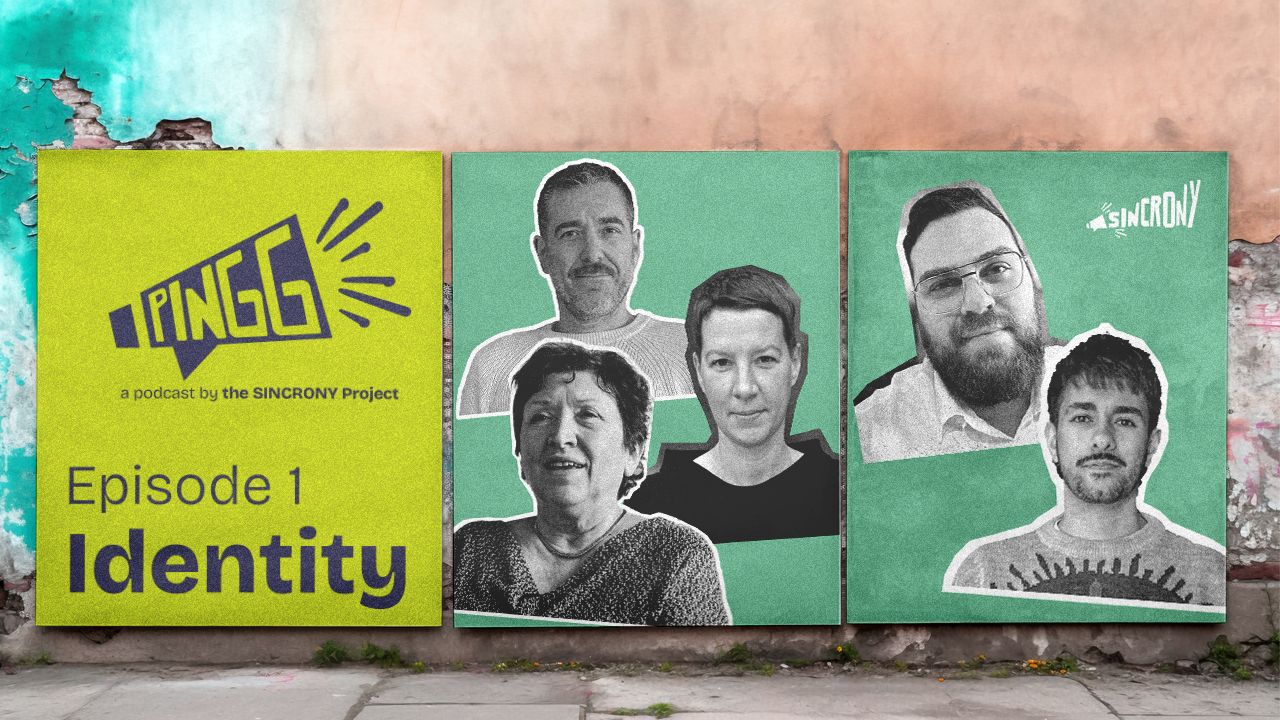
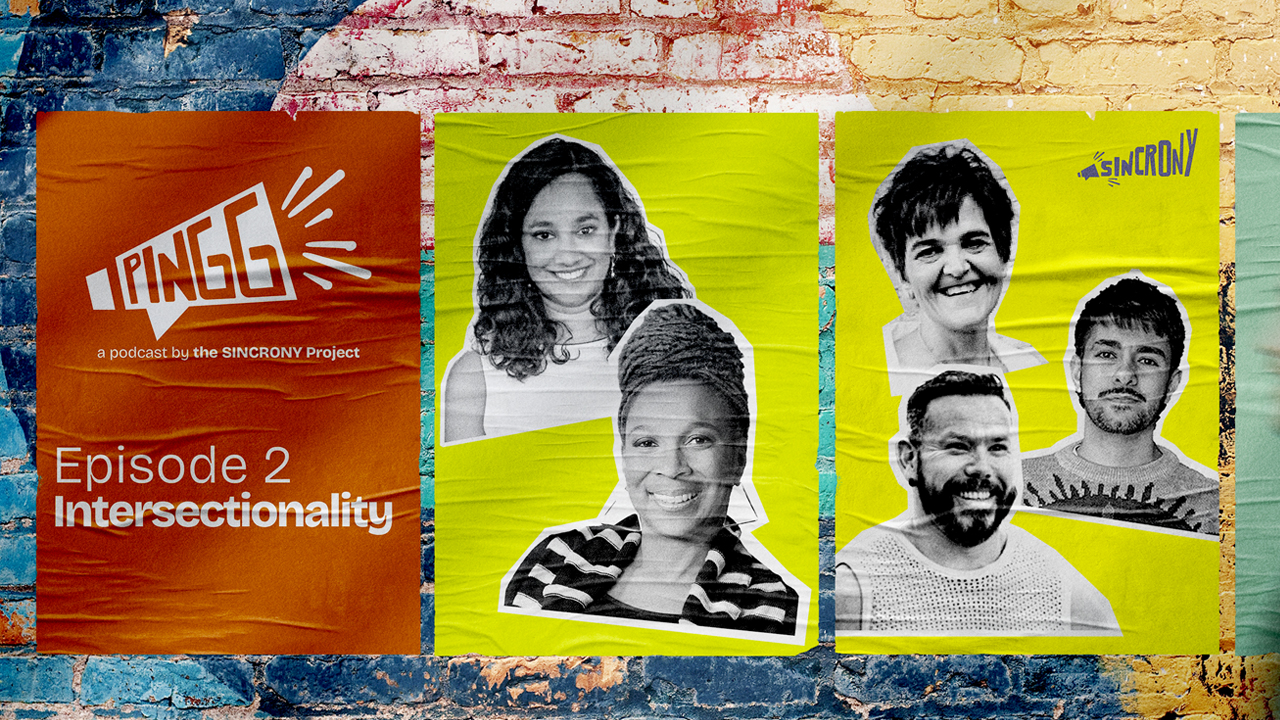


Stay in touch!




sincronyproject.eu

This project has received funding from the European Union under grant agreement no 101132459.
UK participants in Horizon Europe Project SINCRONY are supported by UKRI grant numbers 10099512.
Switzerland participants in Horizon Europe Project SINCRONY are supported by SERI grant numbers 23.00494.